
 Imagen 1 de 1
DIMENSIONES: 59"W x 39"H
En La primera bailarina: legado de mujeres, María Esther Panesso Mercado transforma el lenguaje clásico del ballet en una poderosa metáfora sobre el linaje femenino, el liderazgo y la libertad interior.
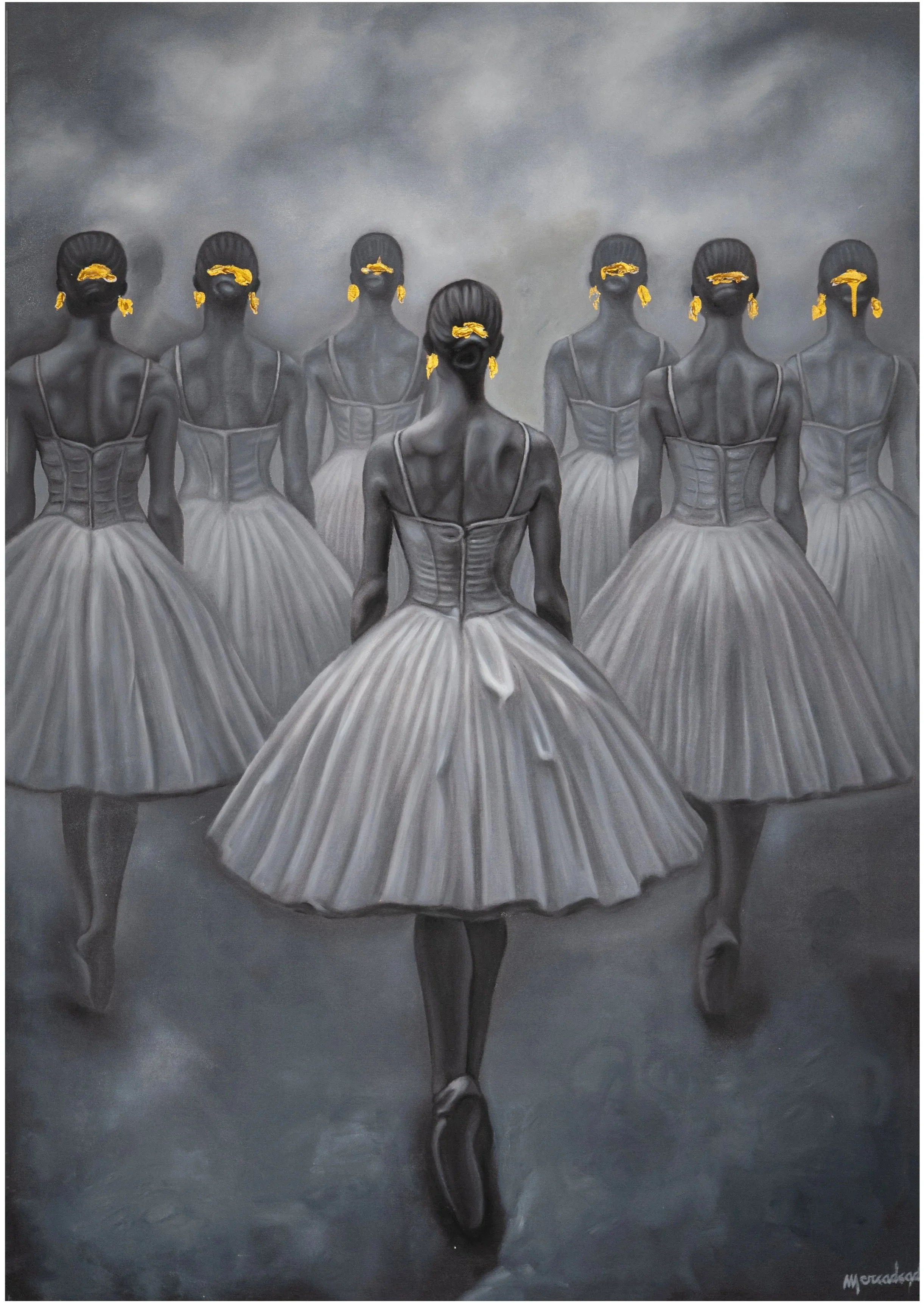
Siete bailarinas avanzan a través de un espacio envuelto en niebla, casi suspendido fuera del tiempo. Sus figuras, representadas en una sobria paleta monocromática, evocan la disciplina, el silencio y los años de sacrificio invisible que existen detrás de toda expresión de gracia. En el centro, al frente de la formación, se encuentra la primera bailarina, un autorretrato simbólico de la artista. Avanza con una determinación serena, encarnando a la mujer que da el primer paso, que abre el camino y que lleva consigo la fuerza de aquellas que la precedieron.
Las bailarinas aparecen de espaldas, privando al espectador de la comodidad de una identidad concreta y convirtiéndolas, en cambio, en arquetipos de la experiencia femenina. Cada figura representa una etapa de resiliencia, disciplina y crecimiento. Aquí, el ballet no es simplemente una representación escénica; es el lenguaje de la perseverancia. Cada espalda erguida y cada paso preciso hablan de años de esfuerzo ocultos detrás de la gracia.
Los destellos dorados en sus cabellos resplandecen sobre los cuerpos en escala de grises como fragmentos de una herencia: símbolos del linaje femenino que une a generaciones de mujeres. Evocan la memoria, la dignidad y esa fuerza silenciosa que se transmite de madre a hija.
En su esencia, la obra refleja la propia historia de la artista. La bailarina que encabeza la procesión representa a la mujer que avanza guiada por la fuerza de su linaje, honrando a las mujeres que dieron forma a su vida y las enseñanzas que deja la adversidad. En esta marcha, la disciplina se convierte en libertad, la lucha se transforma en elegancia y el propio camino adquiere un nuevo significado.
A través de esta composición, Mercado invita al espectador a reflexionar sobre esas lecciones invisibles que la vida deja en nosotros: que la verdadera libertad nace de la disciplina, que el liderazgo se forja a través de la resiliencia y que la fuerza de una mujer suele llevar consigo los ecos de las generaciones que la precedieron.
En La primera bailarina, el movimiento se convierte en memoria y la marcha silenciosa de estas mujeres se transforma en un homenaje a la fuerza perdurable de todas las mujeres.
DIMENSIONES: 59"W x 39"H
En La primera bailarina: legado de mujeres, María Esther Panesso Mercado transforma el lenguaje clásico del ballet en una poderosa metáfora sobre el linaje femenino, el liderazgo y la libertad interior.
Siete bailarinas avanzan a través de un espacio envuelto en niebla, casi suspendido fuera del tiempo. Sus figuras, representadas en una sobria paleta monocromática, evocan la disciplina, el silencio y los años de sacrificio invisible que existen detrás de toda expresión de gracia. En el centro, al frente de la formación, se encuentra la primera bailarina, un autorretrato simbólico de la artista. Avanza con una determinación serena, encarnando a la mujer que da el primer paso, que abre el camino y que lleva consigo la fuerza de aquellas que la precedieron.
Las bailarinas aparecen de espaldas, privando al espectador de la comodidad de una identidad concreta y convirtiéndolas, en cambio, en arquetipos de la experiencia femenina. Cada figura representa una etapa de resiliencia, disciplina y crecimiento. Aquí, el ballet no es simplemente una representación escénica; es el lenguaje de la perseverancia. Cada espalda erguida y cada paso preciso hablan de años de esfuerzo ocultos detrás de la gracia.
Los destellos dorados en sus cabellos resplandecen sobre los cuerpos en escala de grises como fragmentos de una herencia: símbolos del linaje femenino que une a generaciones de mujeres. Evocan la memoria, la dignidad y esa fuerza silenciosa que se transmite de madre a hija.
En su esencia, la obra refleja la propia historia de la artista. La bailarina que encabeza la procesión representa a la mujer que avanza guiada por la fuerza de su linaje, honrando a las mujeres que dieron forma a su vida y las enseñanzas que deja la adversidad. En esta marcha, la disciplina se convierte en libertad, la lucha se transforma en elegancia y el propio camino adquiere un nuevo significado.
A través de esta composición, Mercado invita al espectador a reflexionar sobre esas lecciones invisibles que la vida deja en nosotros: que la verdadera libertad nace de la disciplina, que el liderazgo se forja a través de la resiliencia y que la fuerza de una mujer suele llevar consigo los ecos de las generaciones que la precedieron.
En La primera bailarina, el movimiento se convierte en memoria y la marcha silenciosa de estas mujeres se transforma en un homenaje a la fuerza perdurable de todas las mujeres.