Some artists paint beauty
Shop
Dimensions: 43"W x 60"H
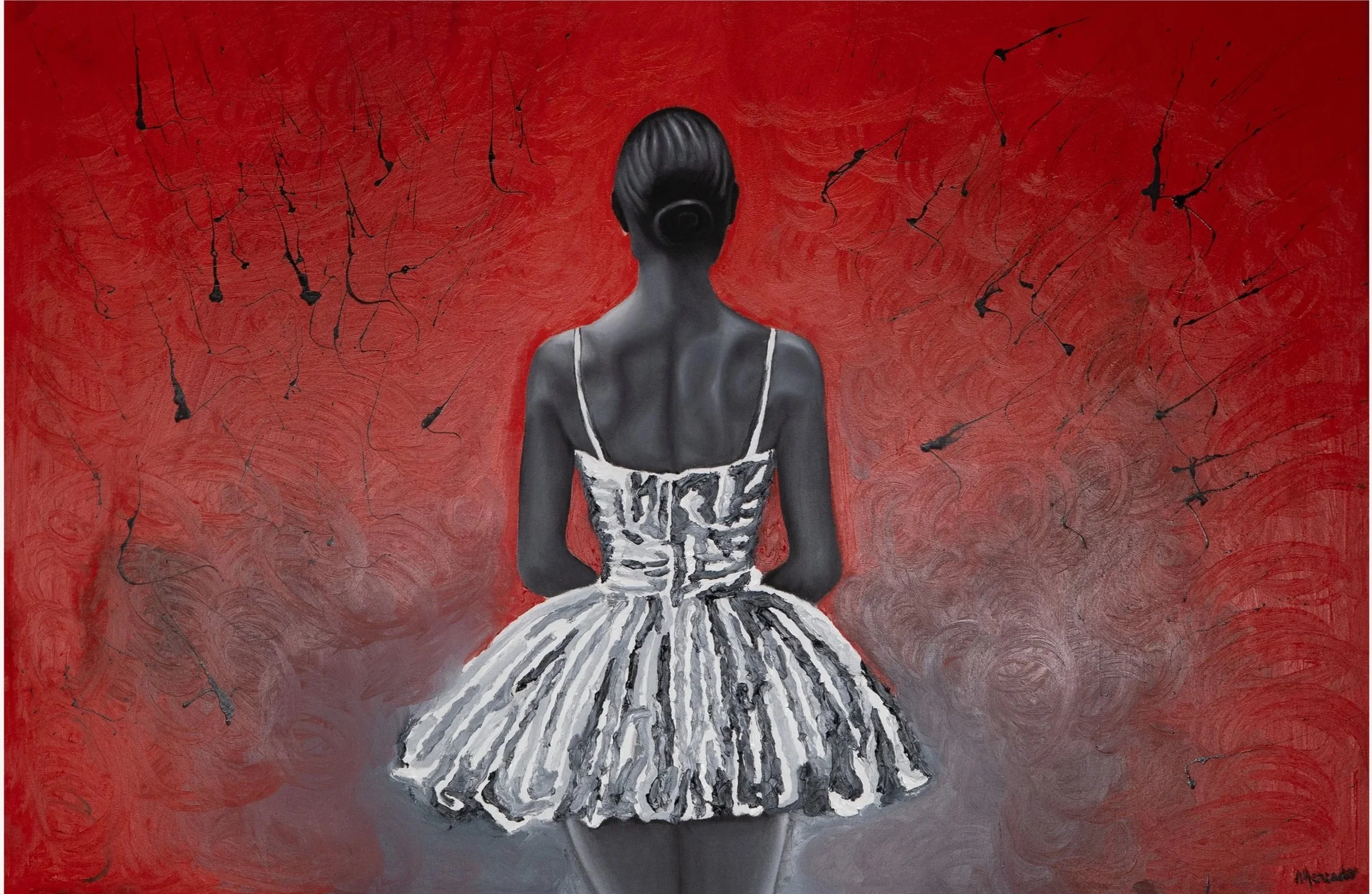
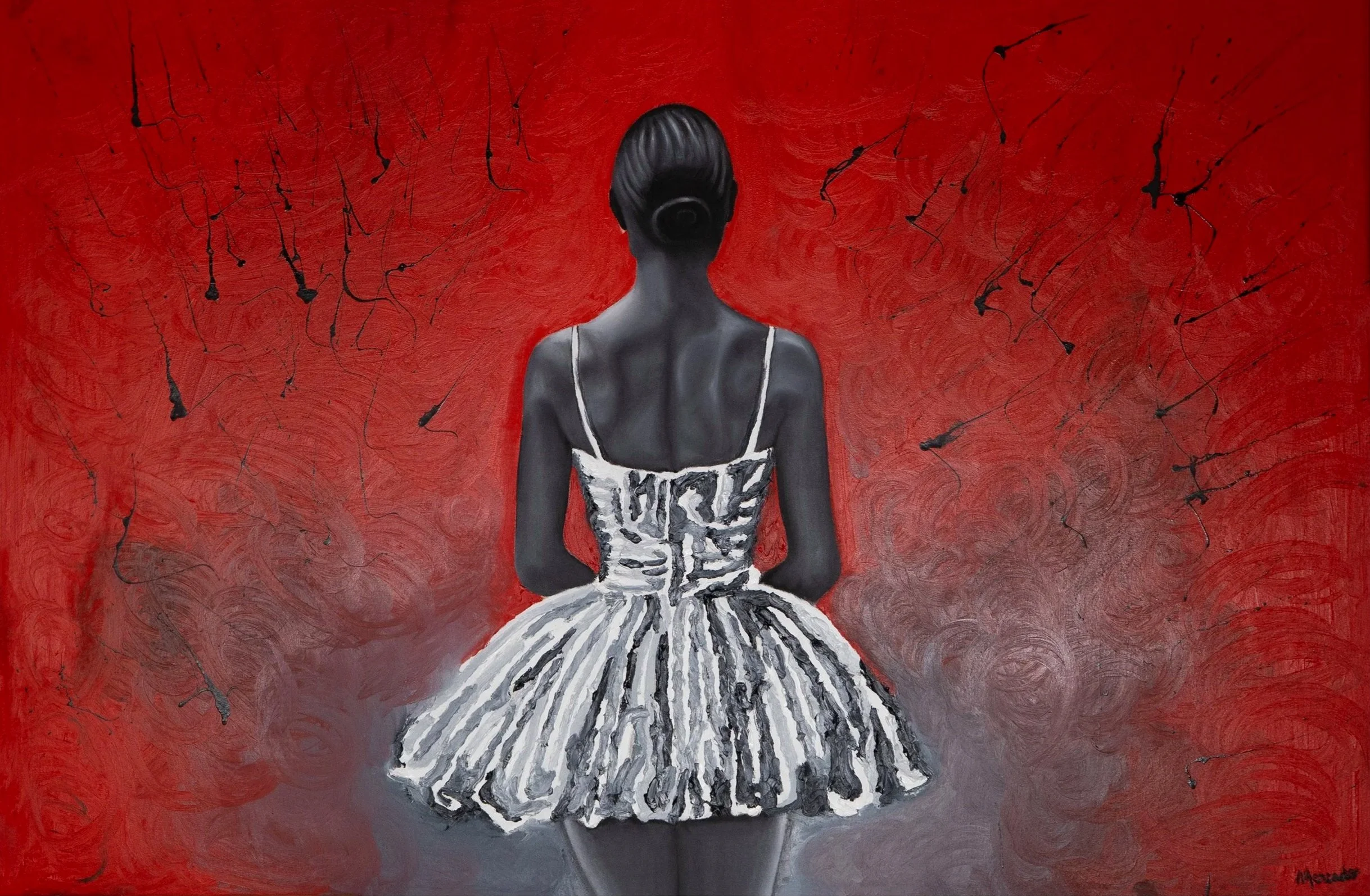
In Unbreakable Grace, María Esther Panesso Mercado presents the female figure as a symbol of resilience standing firm against the turbulence of the world.
A solitary ballerina, seen from behind, occupies the center of the composition. Her posture is poised and disciplined, embodying the years of invisible effort that shape the grace of a dancer. Yet beyond the elegance of ballet lies a deeper message: this figure represents the modern woman—strong, determined, and unwavering in the face of adversity.
The intense red background vibrates with energy and tension. It evokes passion, struggle, and the emotional intensity that accompanies every journey of transformation. The black gestural strokes scattered across the surface appear almost like fragments of conflict or memories of battles fought. They remind the viewer that every act of grace is forged in moments of challenge.
Against this powerful field, the ballerina stands calm and composed. Her stillness becomes a declaration. She does not retreat from the chaos around her; she rises within it.
Mercado uses the language of ballet—discipline, posture, balance—as a metaphor for life itself. True strength, the work suggests, is not the absence of struggle but the ability to maintain dignity and elegance while moving through it.
Through this work, the artist invites the viewer to reflect on one of life’s most profound lessons: that grace is not fragile. It is built through resilience, courage, and the quiet decision to continue moving forward.
In Unbreakable Grace, the ballerina becomes more than a dancer—she becomes a symbol of the enduring strength of women.
Dimensions: 43"W x 60"H
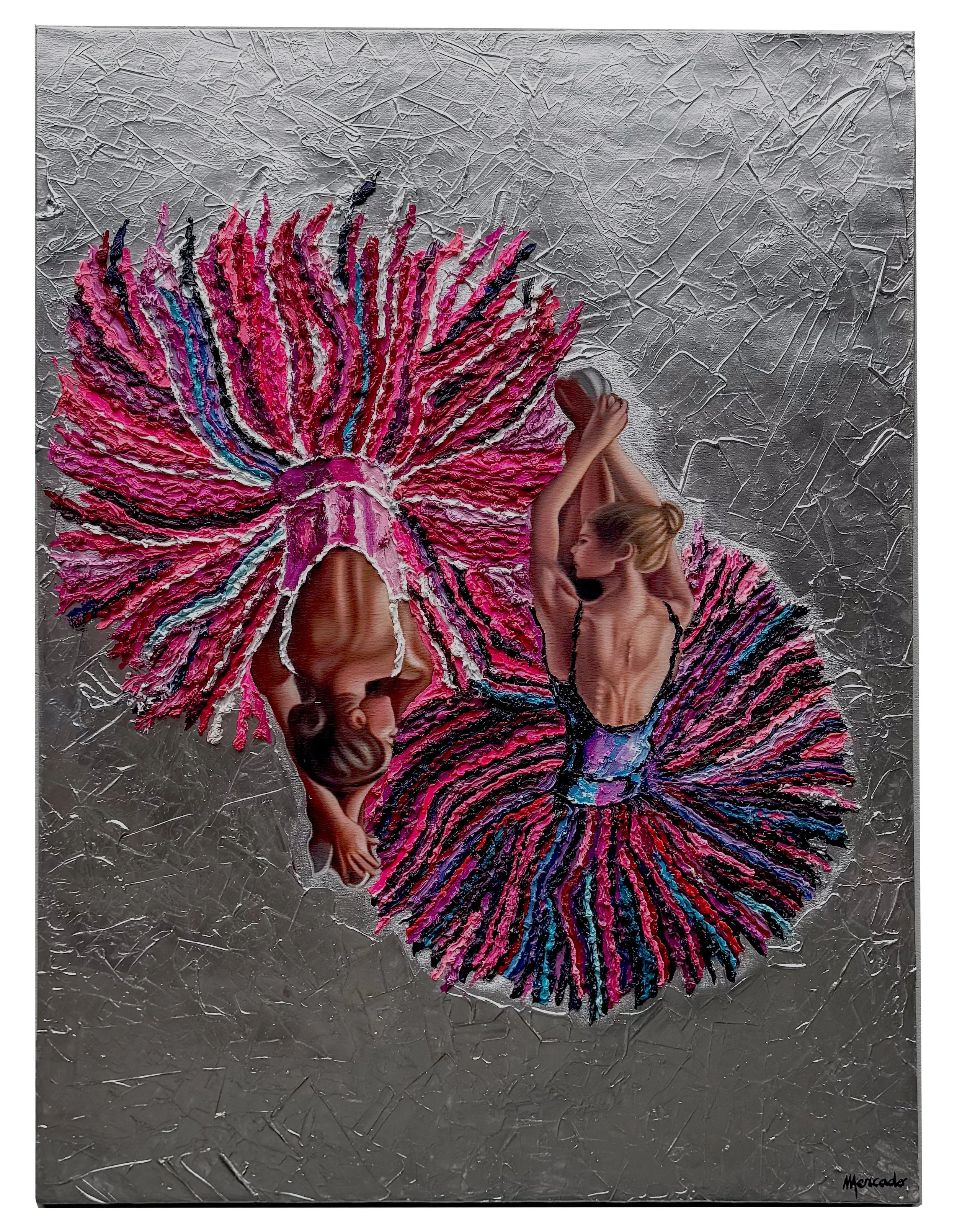
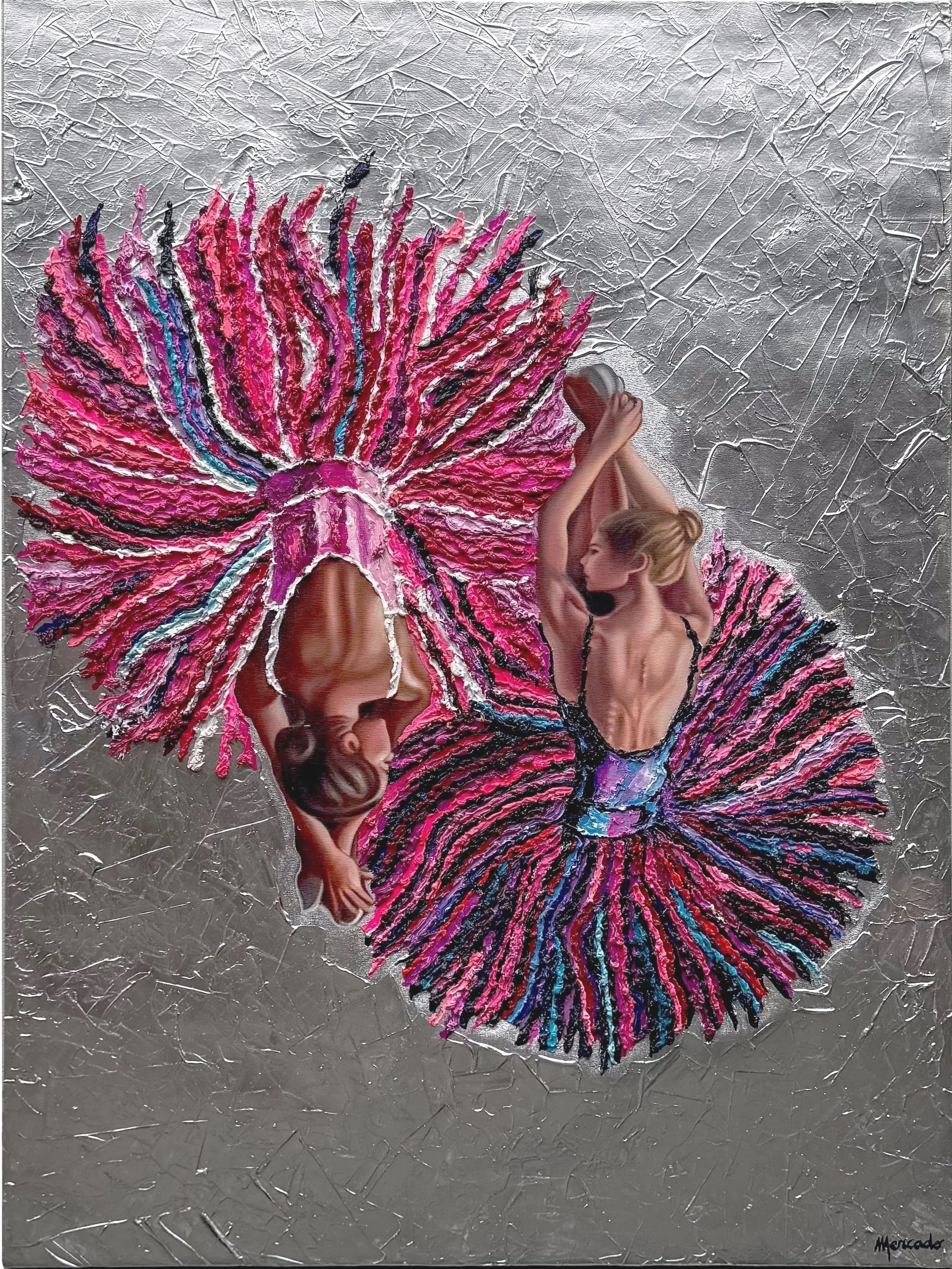
In Reflections of the Soul, María Esther Panesso Mercado explores the profound duality that exists within every human being: the visible self and the hidden self, the woman we show to the world and the one who lives within.
Two ballerinas emerge suspended in space, their vibrant skirts unfolding like radiant flowers in motion. The texture of the dresses bursts outward with color and energy, suggesting movement, life, and the emotional intensity that lies beneath the discipline of dance. Each fold becomes a gesture, each color a pulse of vitality.
The mirrored composition creates a moment of introspection. One dancer appears as the reflection of the other, suggesting that identity is never singular. Within every woman lives both strength and vulnerability, discipline and freedom, control and surrender. Ballet becomes the perfect language for this exploration: behind every graceful movement exists years of sacrifice, perseverance, and quiet determination.
The metallic background, textured and luminous, evokes a timeless, almost celestial space—one where the dancer is not bound by gravity but instead exists between reality and reflection. In this suspended moment, the ballerinas seem to orbit one another, like two aspects of the same spirit discovering balance.
Through this work, Mercado invites the viewer to reflect on one of life’s most essential truths: that self-discovery often begins when we recognize ourselves in our own reflection. The dancer does not merely confront her mirror—she embraces it.
In Reflections of the Soul, movement becomes introspection, color becomes emotion, and the mirrored dancer becomes a symbol of the infinite layers that form the feminine soul.

Dimensions: 45"W x 51"H
In Sailing with Marilyn, María Esther Panesso Mercado reimagines one of the most iconic feminine figures of the twentieth century through her own visual language of movement, grace, and introspection.
Seated delicately in a solitary canoe floating across a vast blue expanse, Marilyn Monroe appears both familiar and transformed. The legendary Hollywood symbol of glamour is presented not on a stage of fame, but in a moment of quiet contemplation—suspended between water and sky, between myth and humanity.
Her white ballerina skirt expands around her like a soft halo of light, blending the worlds of cinema and ballet. In Mercado’s universe, the dancer becomes a metaphor for the inner discipline hidden behind beauty. Grace, here, is not accidental—it is the result of perseverance, vulnerability, and the courage to remain authentic in a world that constantly demands performance.
The canoe glides across calm waters, evoking the idea of life as a journey. Marilyn, often remembered as an icon shaped by the gaze of others, becomes in this work a woman reclaiming her own space. She is no longer merely an image admired from afar; she is a traveler navigating the deeper currents of identity and selfhood.
The vast blue environment surrounding her amplifies the sense of solitude and reflection. It is a space where fame dissolves and the human spirit emerges. In Mercado’s interpretation, Marilyn is not simply a cultural legend—she becomes a symbol of the universal feminine search for freedom, authenticity, and peace.
Through Sailing with Marilyn, the artist invites the viewer to reconsider the meaning of beauty and celebrity. Beneath the surface of glamour lies a woman navigating her own waters, reminding us that behind every icon lives a soul seeking balance, dignity, and truth.
Dimensions: 59"W x 39"H
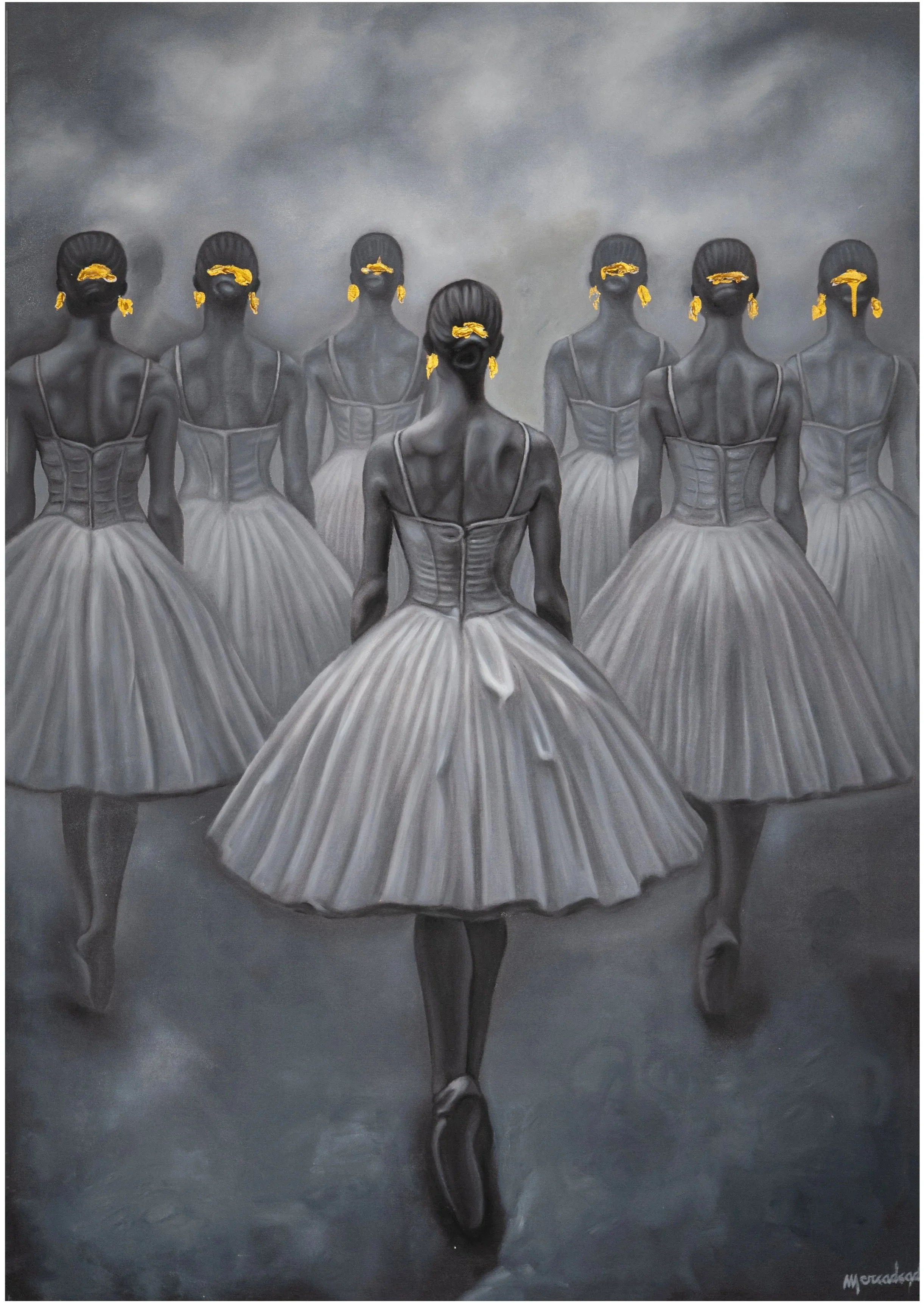
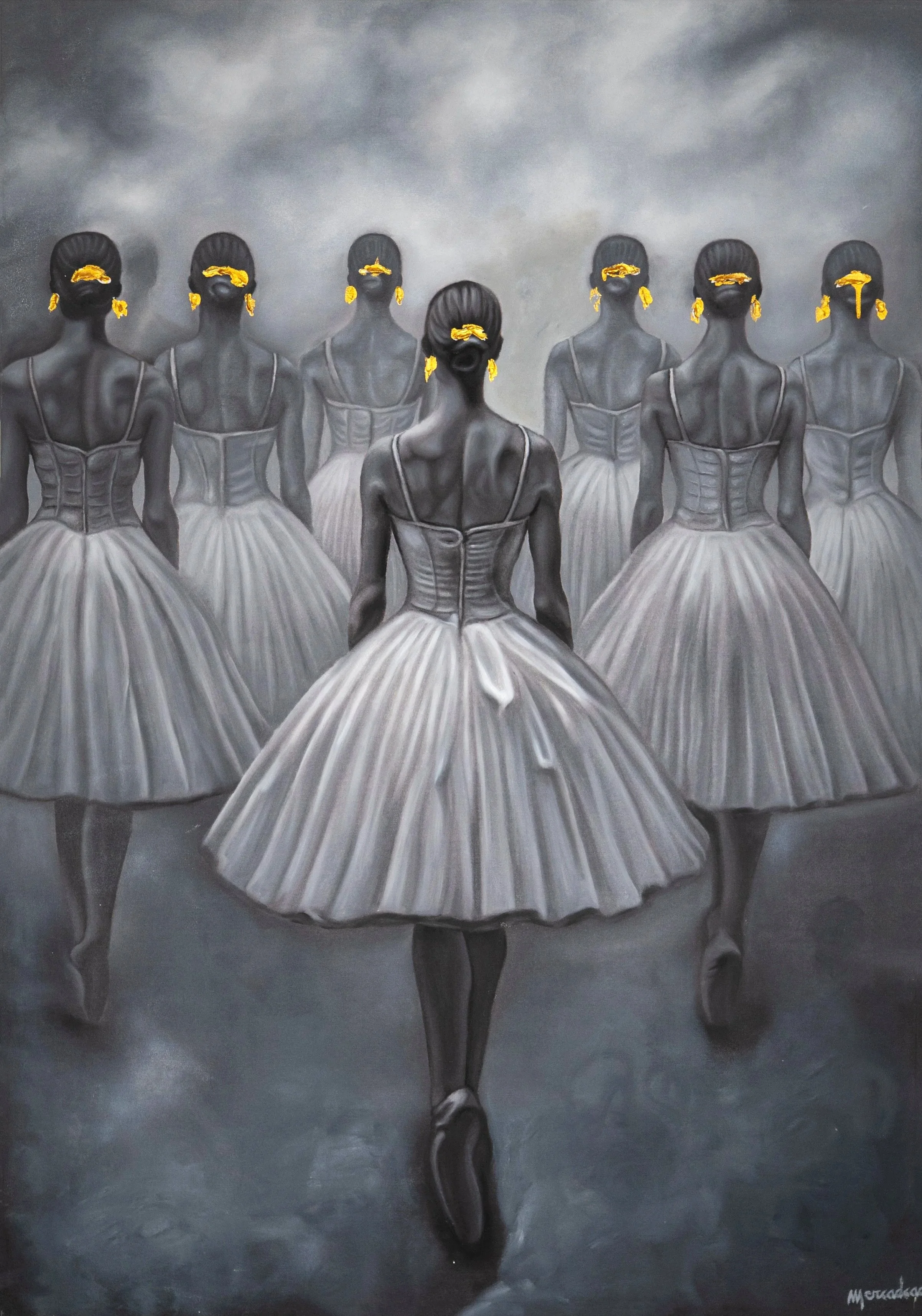
In The First Ballerina: Legacy of Women, María Esther Panesso Mercado transforms the classical language of ballet into a powerful metaphor for feminine lineage, leadership, and inner freedom.
Seven dancers advance through a misted, almost timeless space, their figures rendered in a restrained monochromatic palette that evokes discipline, silence, and years of invisible sacrifice. At the center, leading the formation, stands the first ballerina—a symbolic self-portrait of the artist. She walks forward with quiet determination, embodying the role of the woman who moves first, who opens the path, and who carries within her the strength of the women who came before her.
The dancers are seen from behind, denying the viewer the comfort of identity and instead transforming them into archetypes of the feminine experience. Each figure represents a stage of resilience, discipline, and evolution. Ballet here is not merely performance; it is the language of perseverance. Every lifted spine and poised step speaks of years of effort hidden behind grace.
The golden accents in their hair glow against the grayscale bodies like fragments of inheritance—symbols of the feminine lineage that binds generations of women together. They evoke memory, dignity, and the quiet power passed from mother to daughter.
At its core, the work reflects the artist’s own story. The leading dancer represents the woman who moves forward guided by the strength of her lineage, honoring the women who shaped her life and the lessons that adversity leaves behind. In this procession, discipline becomes freedom, struggle becomes elegance, and the journey itself becomes transformation.
Through this composition, Mercado invites the viewer to reflect on the invisible lessons life leaves upon us: that true freedom is born from discipline, that leadership is forged through resilience, and that the strength of a woman often carries the echoes of generations before her.
In The First Ballerina, movement becomes memory, and the quiet march of these dancers becomes a tribute to the enduring power of women.

María Esther Panesso Mercado paints resilience.
Before her work appeared in international galleries and on the iconic screens of Times Square, she spent years inside Colombian courtrooms defending women in vulnerable situations. That rare duality—attorney and internationally exhibited artist—is not a contradiction, but the very foundation of her artistic vision.
Galery
-
![Collage artwork depicting two women in colorful dresses with large, textured, pink, purple, and black feather-like skirts against a reflective silver background.]()
Reflections of the Soul
In Reflections of the Soul, María Esther Panesso Mercado explores the profound duality that exists within every human being: the visible self and the hidden self, the woman we show to the world and the one who lives within.
-
![]()
Sailing with Marilyn
In Sailing with Marilyn, María Esther Panesso Mercado reimagines one of the most iconic feminine figures of the twentieth century through her own visual language of movement, grace, and introspection.
-
![]()
Unbreakable Grace
In Unbreakable Grace, María Esther Panesso Mercado presents the female figure as a symbol of resilience standing firm against the turbulence of the world.
-
![A black and white painting of six ballet dancers in tutus, standing in formation against a cloudy sky. The dancers’ faces are obscured, and they have yellow ribbons or accessories on their faces and ears.]()
The First Ballerina: Legacy of Women
In The First Ballerina: Legacy of Women, María Esther Panesso Mercado transforms the classical language of ballet into a powerful metaphor for feminine lineage, leadership, and inner freedom.

Start a Conversation
Share your vision—let’s create something remarkable together.